

It’s on now.
We’re bounding up the escalation ladder. Both sides. For sure one side, Iran, is shoving, while the other, the US, is trying to climb down.
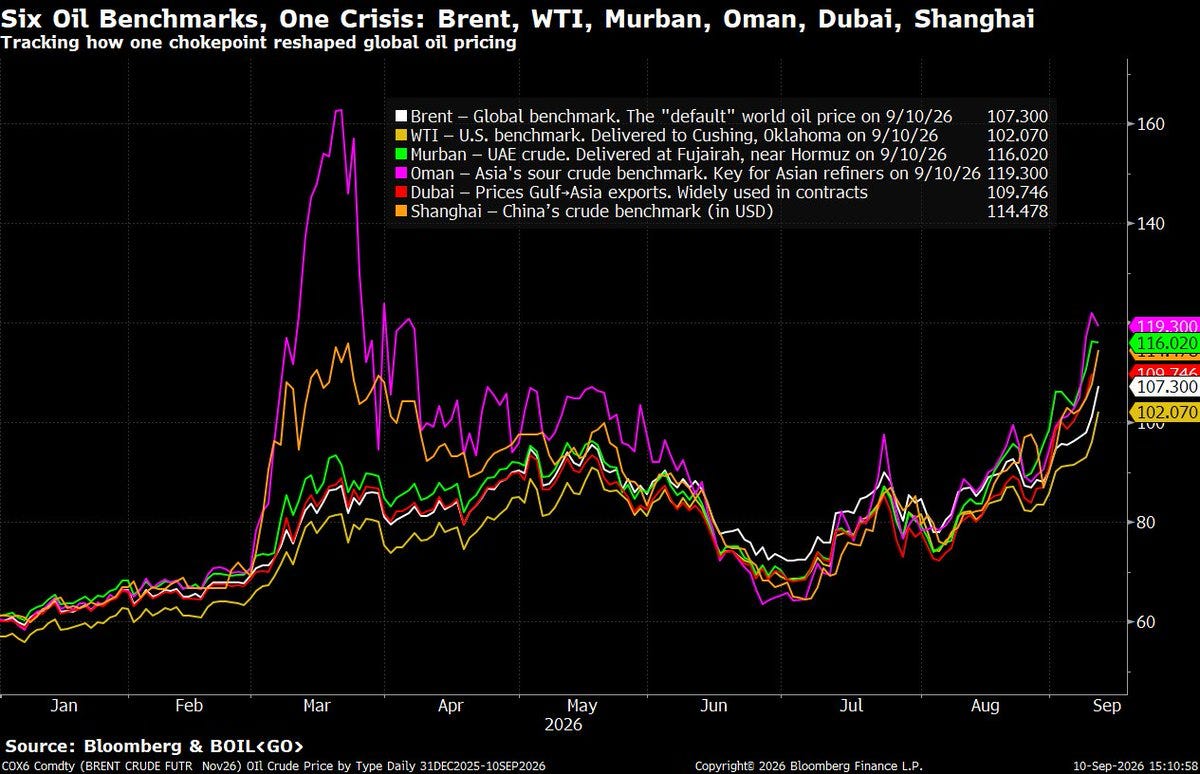
Oil prices have vaulted in the past few weeks, and understandably (and predictably) so. We have, after all, chosen violence.
We Choose Violence

It’s working. Say what you will about Iran, but the conflict they’re prosecuting, this conflict?
Like any high altitude expedition, once you embark on this adventure, it gets more treacherous as we head higher.
What we find interesting though is the complacency.
Despite this . . .
leading to this . . .
It’s the visible inventories though. That’s what people are focused on. Even with the Strait of Hormuz (“SoH”) disruption, we’re only really seeing visible inventories draw by 3-4M bpd, and a material amount of that was from SPRs. (Eric Nuttall’s chart).
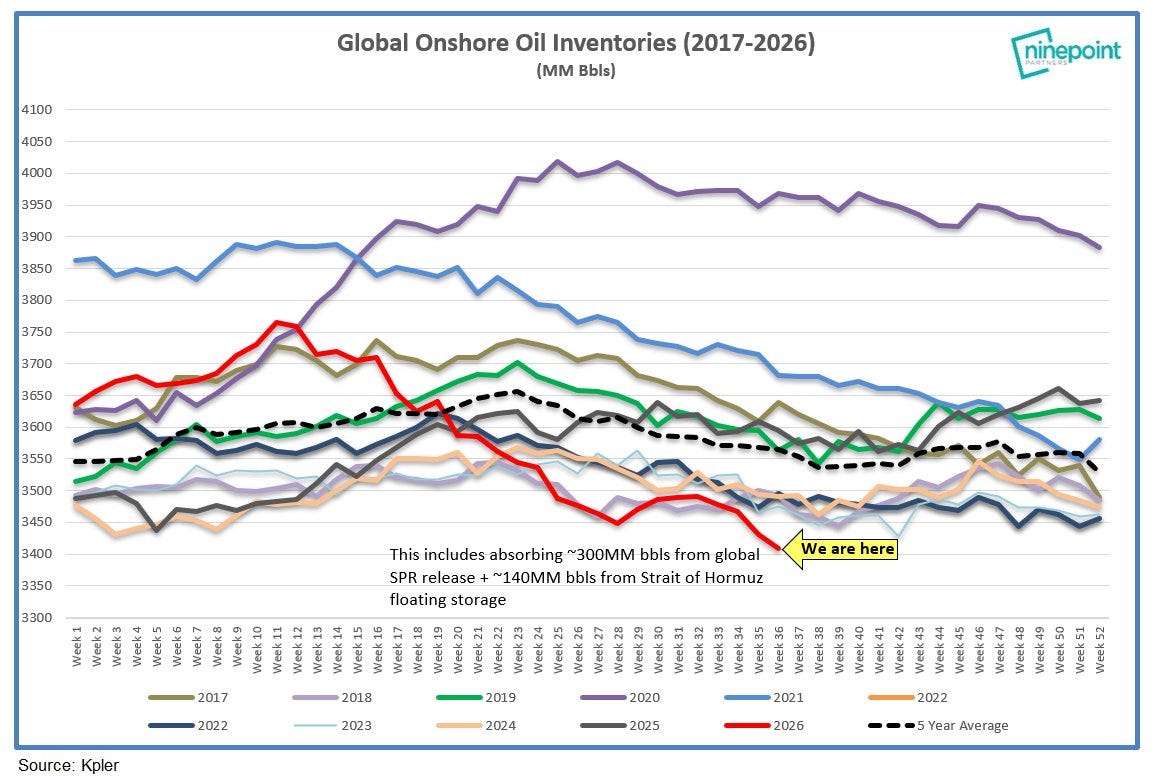
So obviously, we’re wrong, or obviously demand destruction is occurring to absorb the 5-7M bpd that we’re “not” seeing (or 4-6M bpd if you even take out the fact that inventories were building around 1M bpd pre-war)).
Absurd.
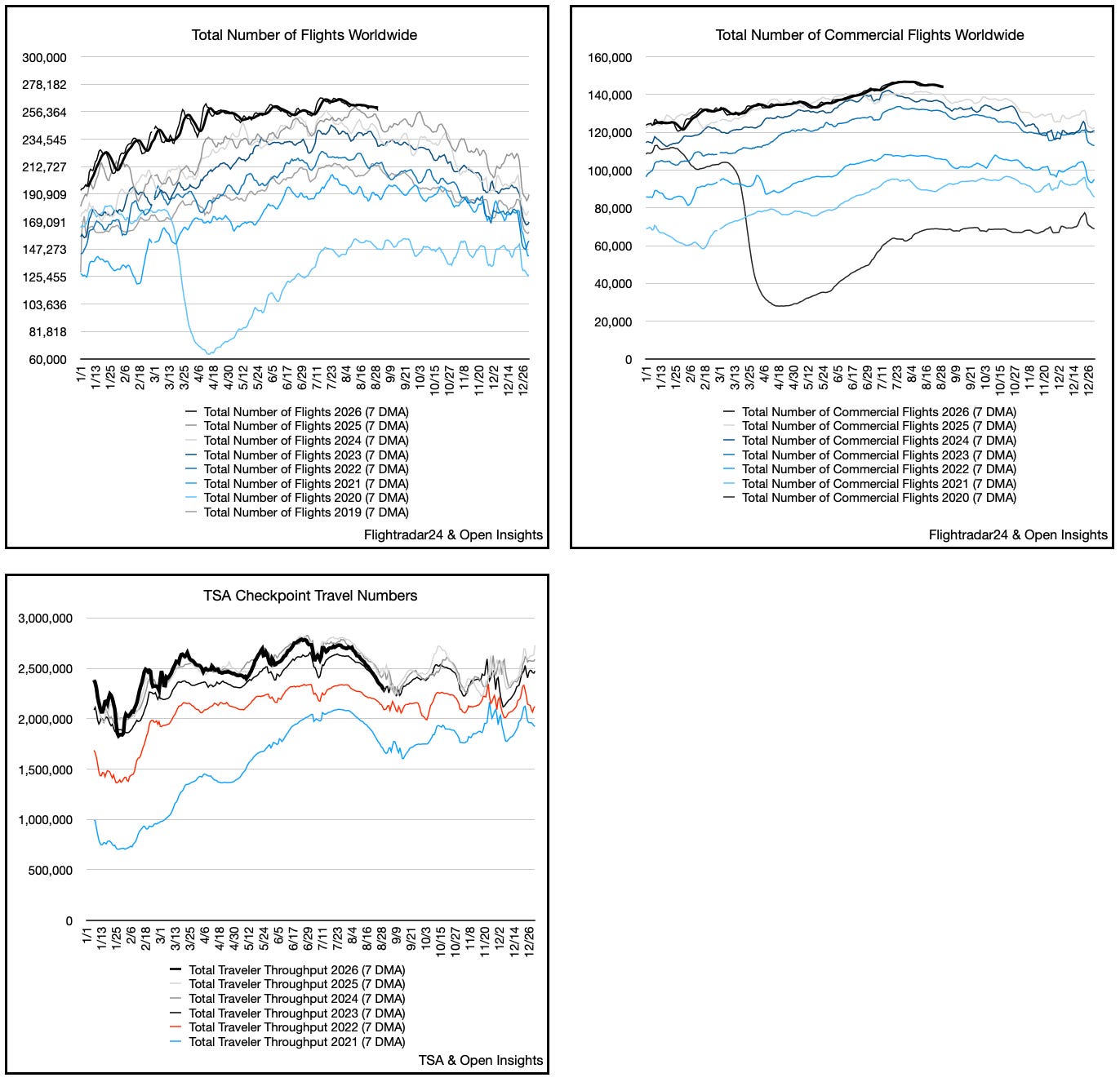
It’s absurd because even a 5M bpd demand collapse (let alone anything more), would be tantamount to a COVID/pandemic shut-down, and last we checked, everyone’s still flying and traveling. Flights are still higher year-over-year.
We do readily admit that demand has taken a hit, likely about 1% or thereabouts worldwide, which translates to 1M bpd give or take. Small, but not hugely material when measured against the supply disruption. You can see it in the US figures. Since June, implied demand is about 1% lower.
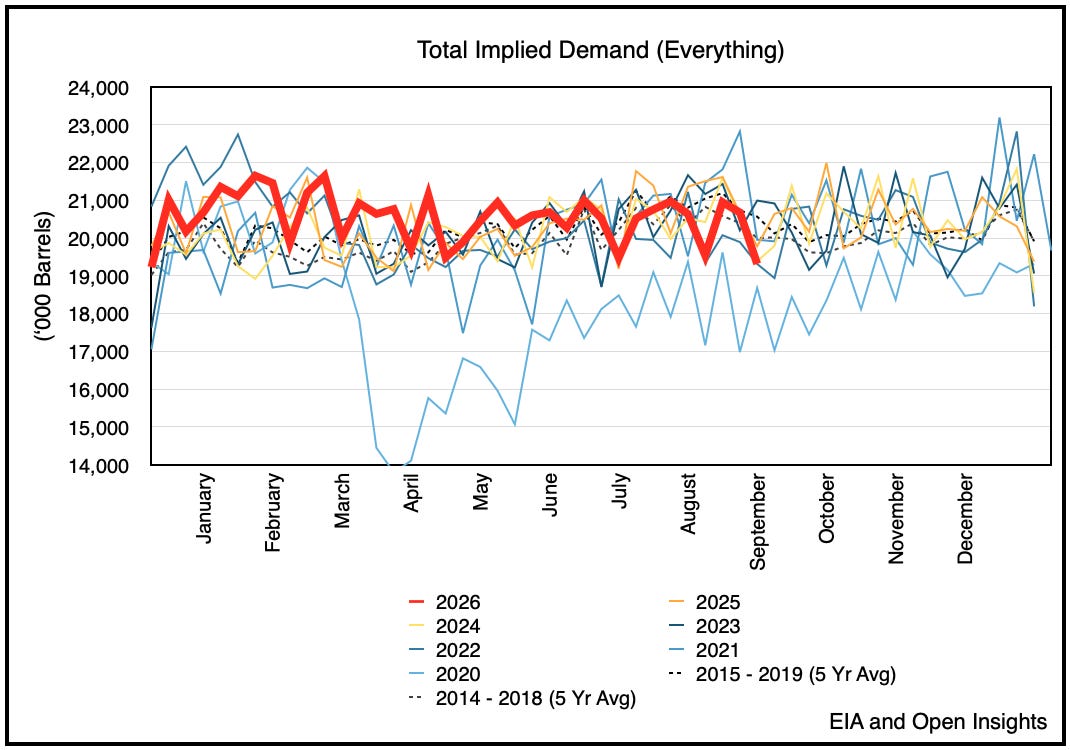
Broaden that out a bit, and you’ll see a slightly higher demand hit in Europe and India. So it could portend for a larger demand hit, and likely will as prices rise here, but again . . . prices need to rise.
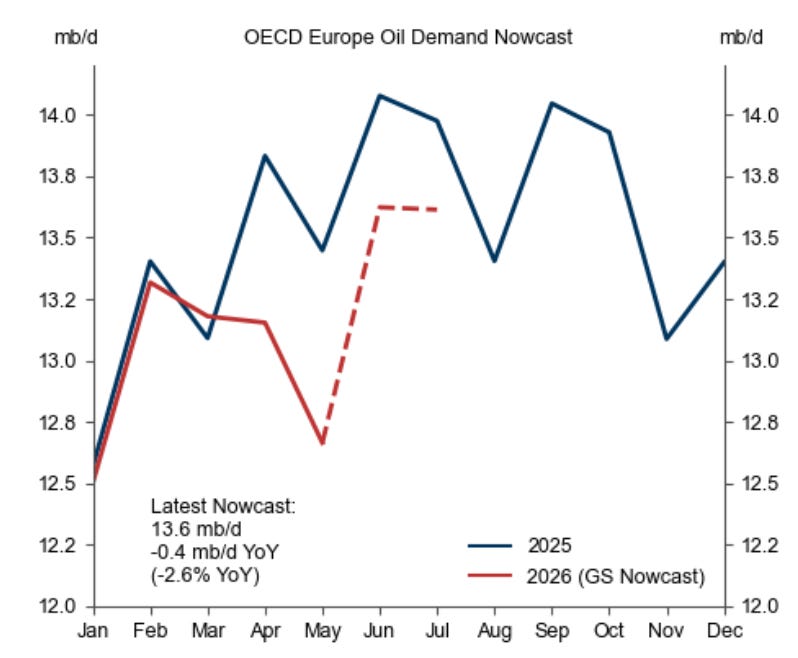
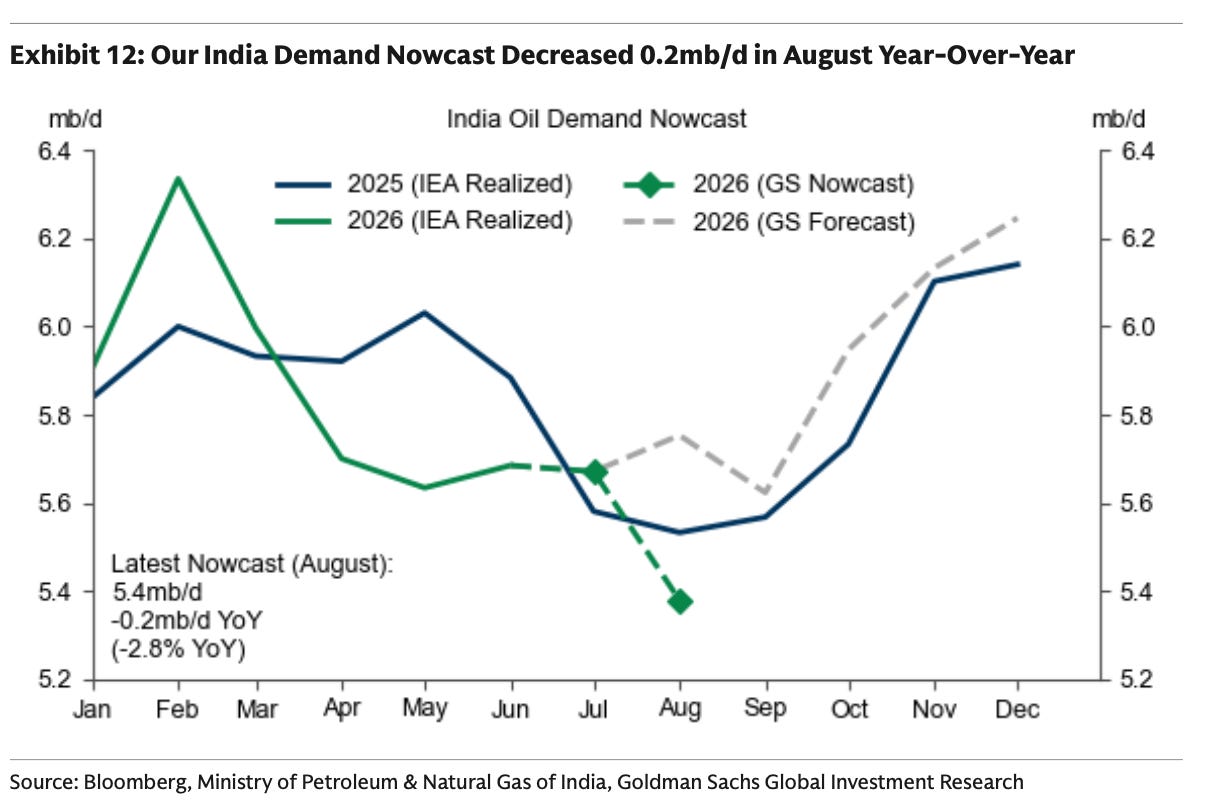
Extrapolate it further and just assume that the world is down slightly, 1%, or 1M bpd. That’s just still not enough, which means if we’ve lost that many barrels from the Middle East, and demand hasn’t fallen off precipitously, inventories must be drawing heavily elsewhere.
In fact, doesn’t it mean non-visible stocks are drawing worldwide? Doesn’t it mean product stocks are drawing globally? Doesn’t it mean China’s drawing crude and products heavily given that Chinese imports have been much lower this year?
We thought so . . . there just wasn’t much data for a few months, and we just needed proof. So it begins . . . as Goldman states in their latest report:
“Chinese gasoline/diesel stocks drew by 2.2/1.7mb throughout August, likely nudging Chinese refiners to raise runs.”
There it is. It’s starting to show-up, and why wouldn’t it? Eventually one would lead to the other unless high pre-war imports were all for SPR stocking (unlikely), or Chinese refiners ignored working capital (impossible).
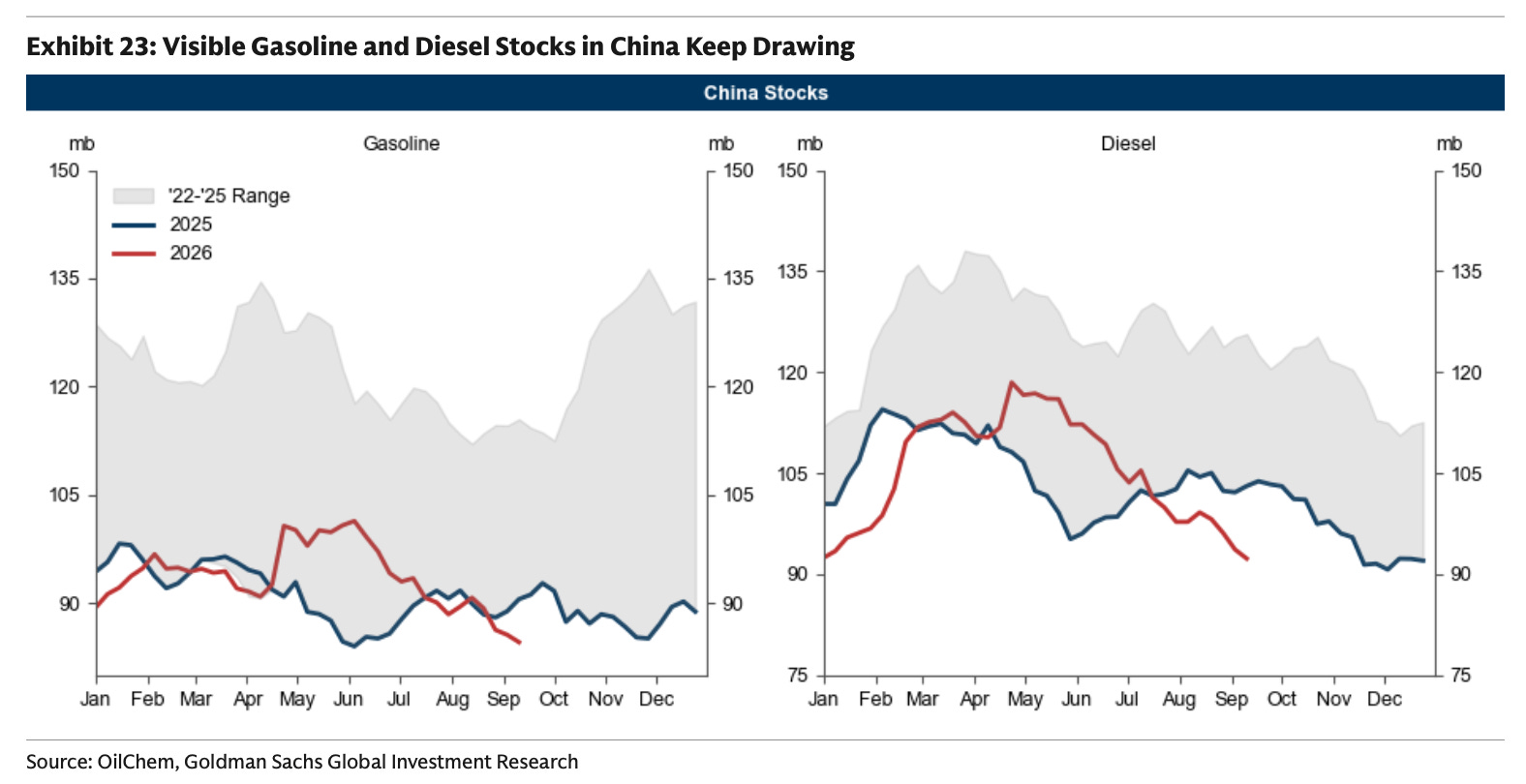
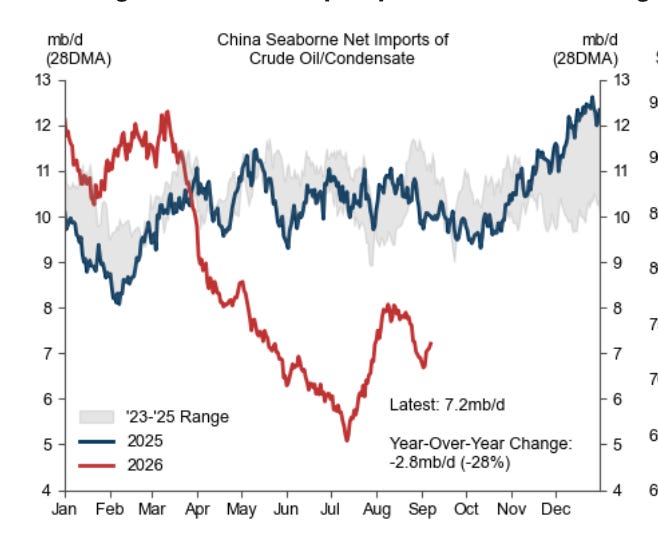
Consequently, it does appear that China has started bidding again for barrels, which is driving up prices in Asia. With product inventories depleted, China will likely ramp refinery production here to avoid product tank bottoms. Furthermore, just take a look at seasonality, imports tend to rise historically into year-end, and product inventories increase as refiners turn that crude to products near YE/Q1 to be used through Chinese New Year and throughout the year.
Extra bonus if increasing imports now also puts more pressure on the Trump Administration with higher fuel prices, inflation, and in turn interest rates for the US midterms. Better yet, it also strengthens the Chinese’s hands in the upcoming US/China trade summit with Xi and Trump (September 24).
China’s restraint in Q2 coupled with the MOU, which allowed floating storage to destock in the Persian Gulf, helped calm the market over the summer and dampen the impact of the war on energy prices. With the global buffers depleted, we’re largely reliant on China’s largesse and inventories, but their willingness to extend a helping hand is approaching its limits. The country’s reentry into the market represents unwanted extra demand just as inventories have thinned. Without adequate supply, and with continued violence in the Middle East, the only solve right now is price, and a higher one (i.e., high enough energy prices to coax real demand destruction).
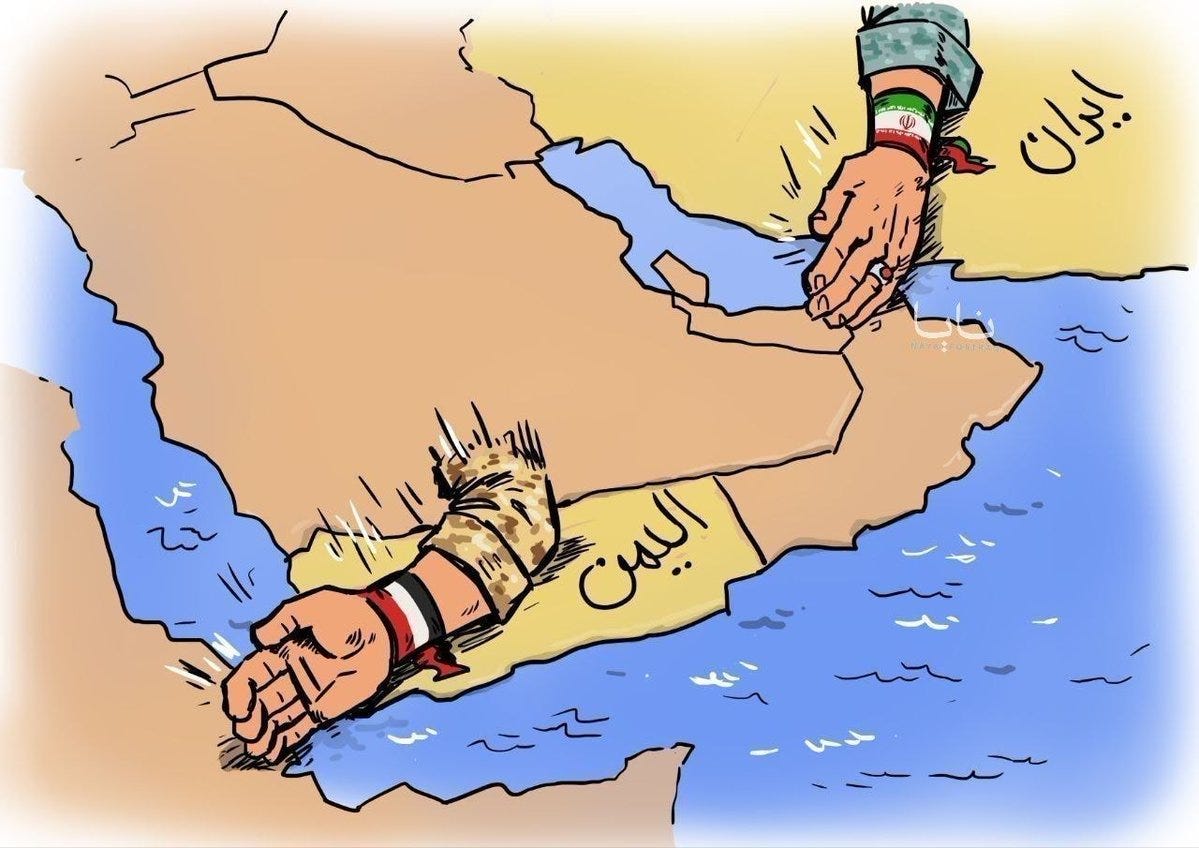
Unless of course you believe Iran will relinquish all of its tactical and strategic gains thus far (i.e., control over the SoH, de facto control of Yemen, de facto control of Iraq, control of the Red Sea, retreat of US forces from its military bases), reopen the SoH, and stop pressuring the US pre-or-post midterms? Yeah, we didn’t think so. In fact, just the opposite.
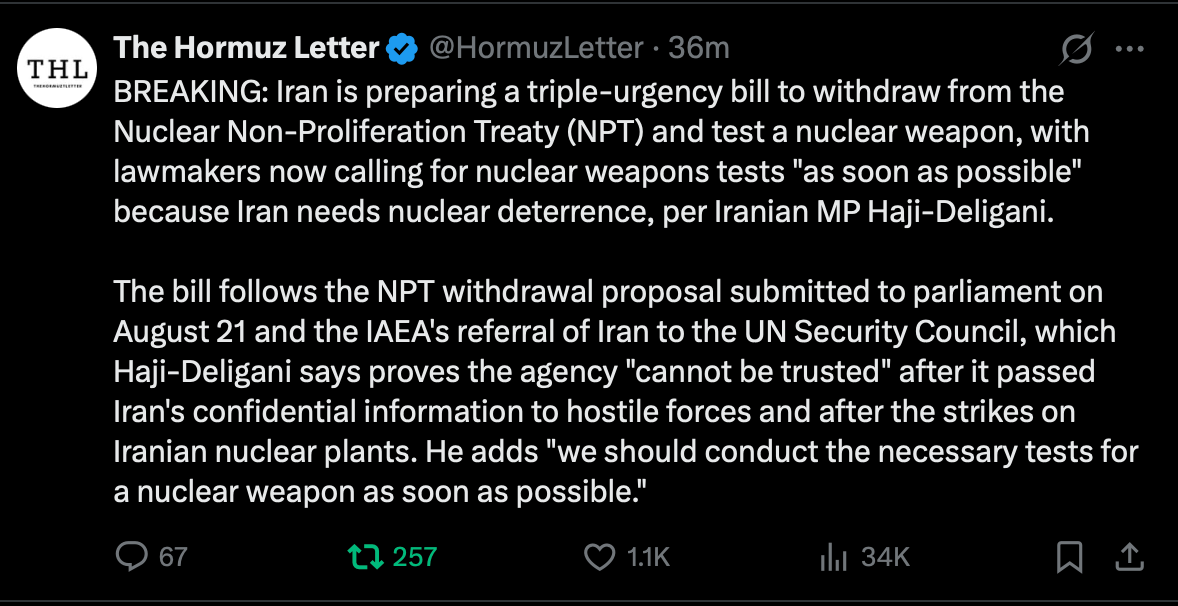
Hence as we grind higher, and as visible draws start to reflect the true cost of this war (as the “invisible buffers” fade away), just remember, we chose this.
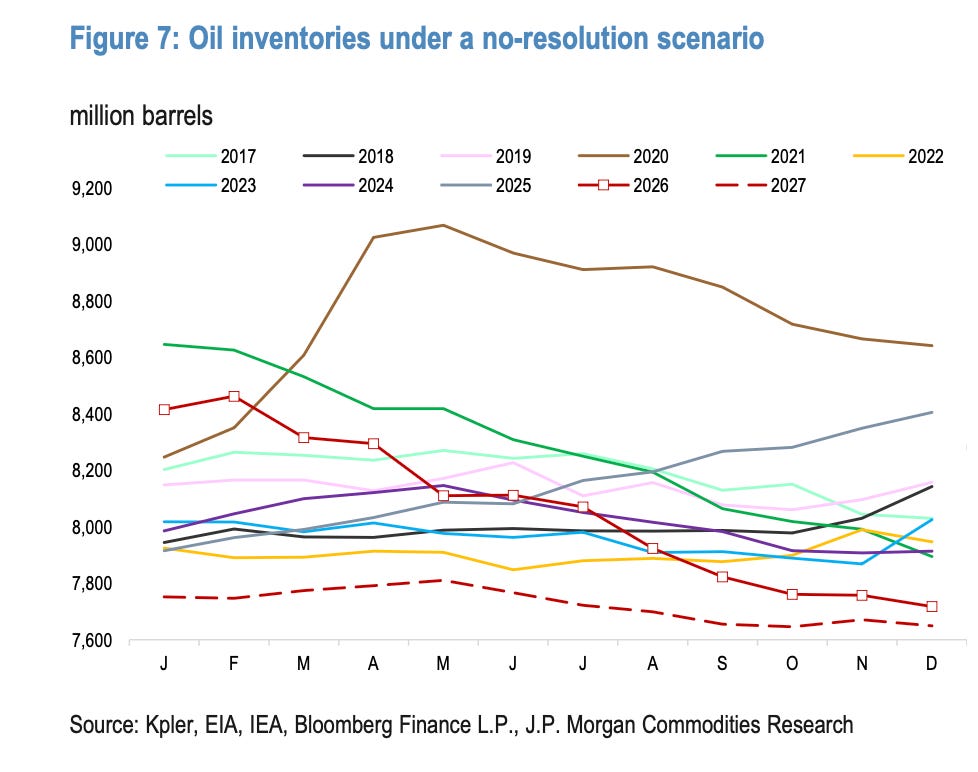
We chose violence, and price violence will choose us.
Please hit the “like” button and subscribe below if you enjoyed reading the article, thank you.